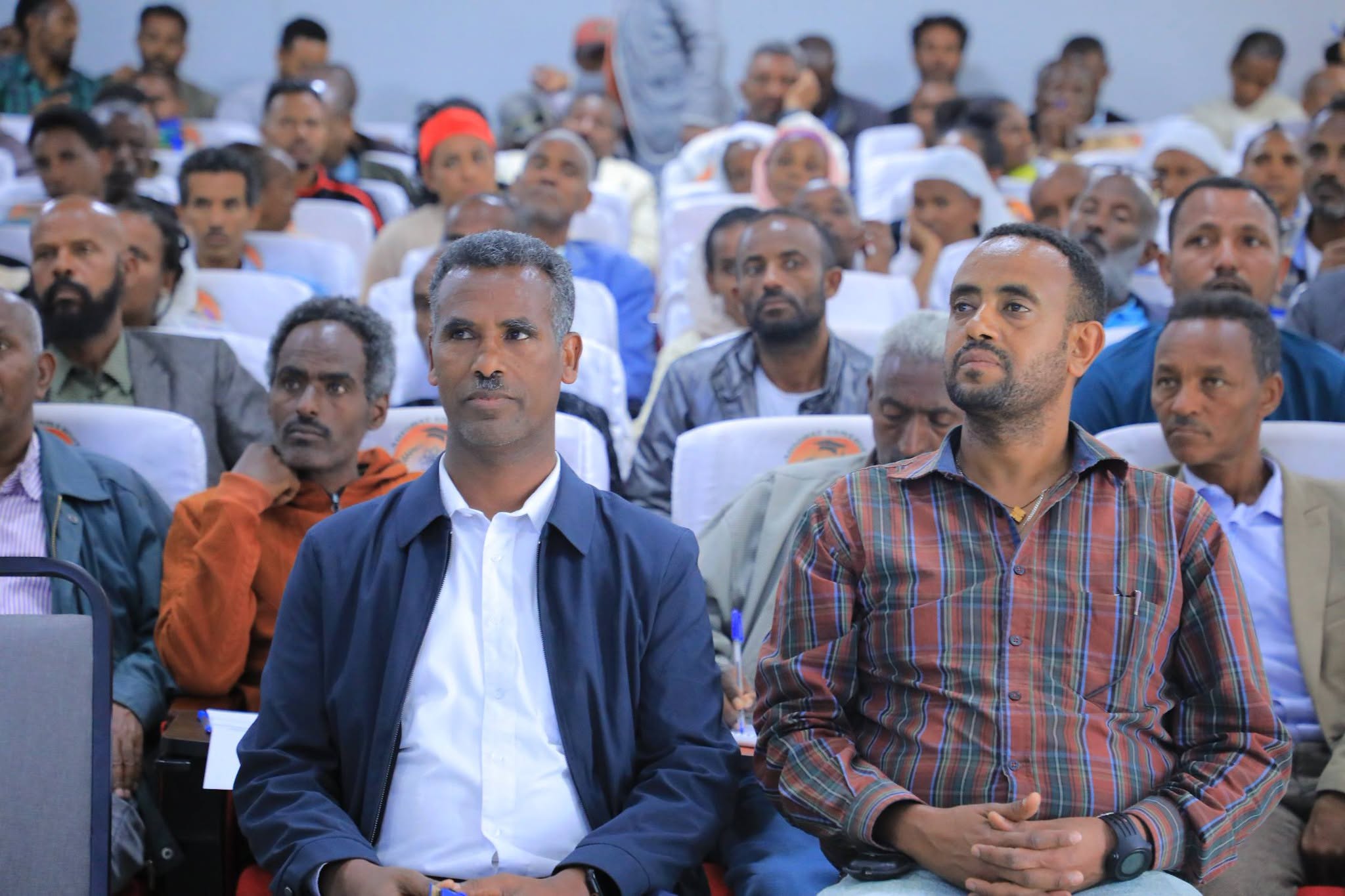
Adigrat University Provides Training on Trauma-Informed Classroom Management and Digital Literacy for Secondary School Teachers.
Adigrat University, through its Department of Teacher Education, organized a capacity-building training program for secondary school teachers and education office officials from Adigrat Town under the theme “Trauma-Informed Classroom Management.” The training aimed to enhance teachers’ psychosocial competencies and strengthen effective classroom management practices in post-crisis learning environments.
The program brought together university leaders, academic staff, officials from the Adigrat Town Education Office, and secondary school teachers from across the town.
Opening the event, Dr. Gebrekidan Tesfay, Vice President for Academic, Research, and Community Engagement, highlighted the long-standing partnership between Adigrat University and local schools. He emphasized the critical role of human capital development in community advancement and underscored the significant contribution teachers make to education, agricultural development, and urban transformation. He further noted the University’s commitment to strengthening technology-supported education and knowledge sharing, stressing the importance of teachers’ psychosocial well-being in creating productive learning environments.
Representing the Adigrat Town Education Office, Mr. Awraneh expressed appreciation for the University’s continued support to local schools and reaffirmed the office’s commitment to further strengthening its collaboration with the University.
As part of the training, Dr. Teklebrhan Gebremeskel delivered a comprehensive session on trauma, the psychological impacts of war and other crises, and modern pedagogical approaches for supporting learners affected by adversity. Particular emphasis was given to effective classroom management strategies and trauma-sensitive teaching practices.
In a separate session, Mr. Gebrekristos Gebru from the Department of Computer Science presented on “Digital Literacy Essentials, Information Sharing, and Communication Technologies,” providing participants with practical insights into digital tools and technology-enhanced teaching and learning.
The training equipped participants with valuable knowledge and skills in both psychosocial support and digital literacy. The program concluded with an interactive discussion and question-and-answer session, during which participants called for the continuation and expansion of similar capacity-building initiatives in the future.